
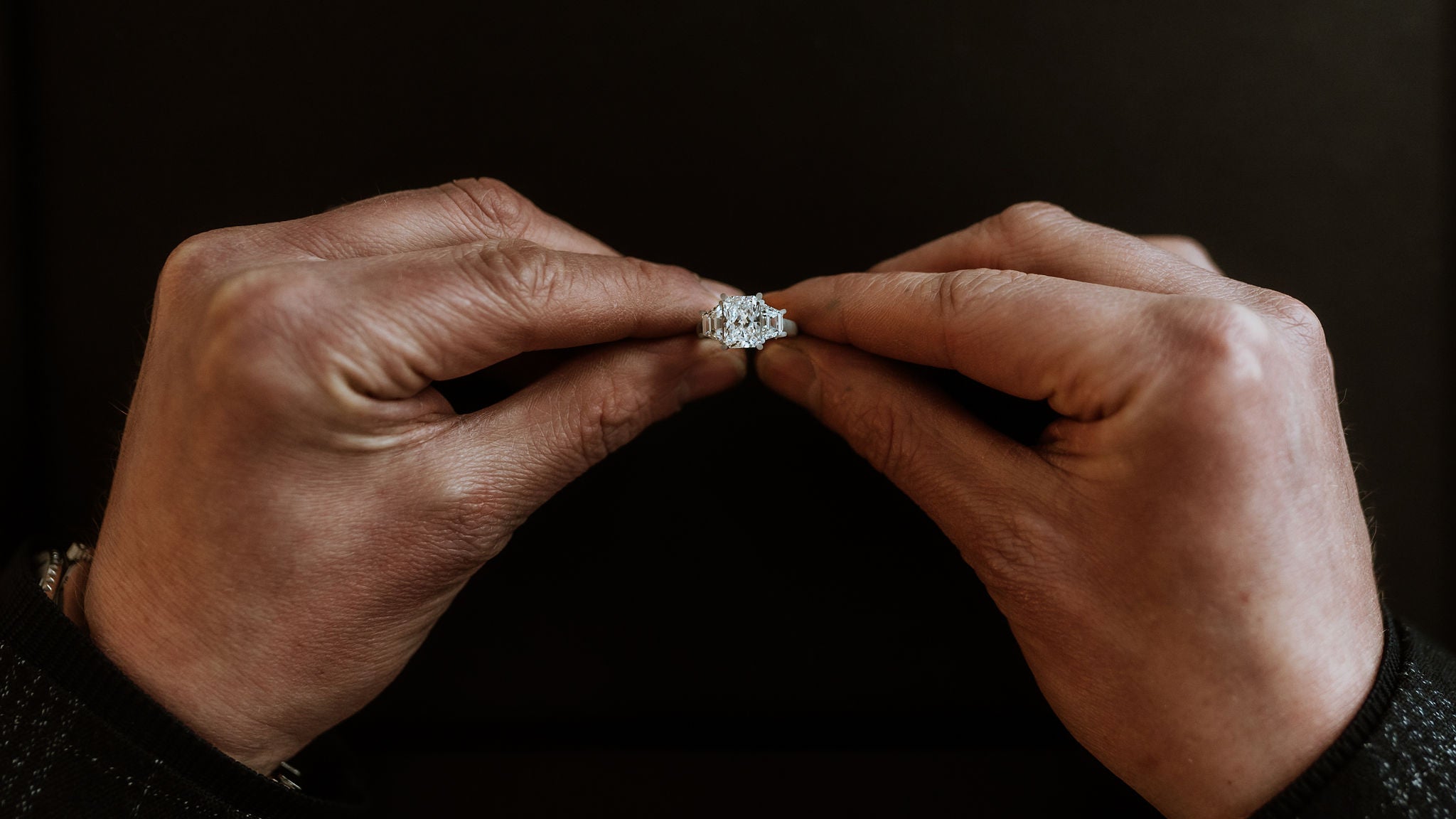
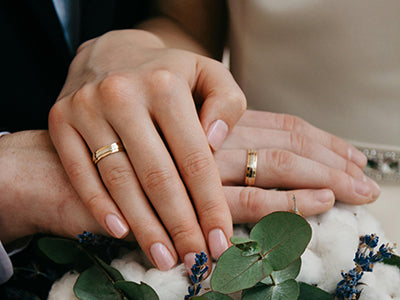
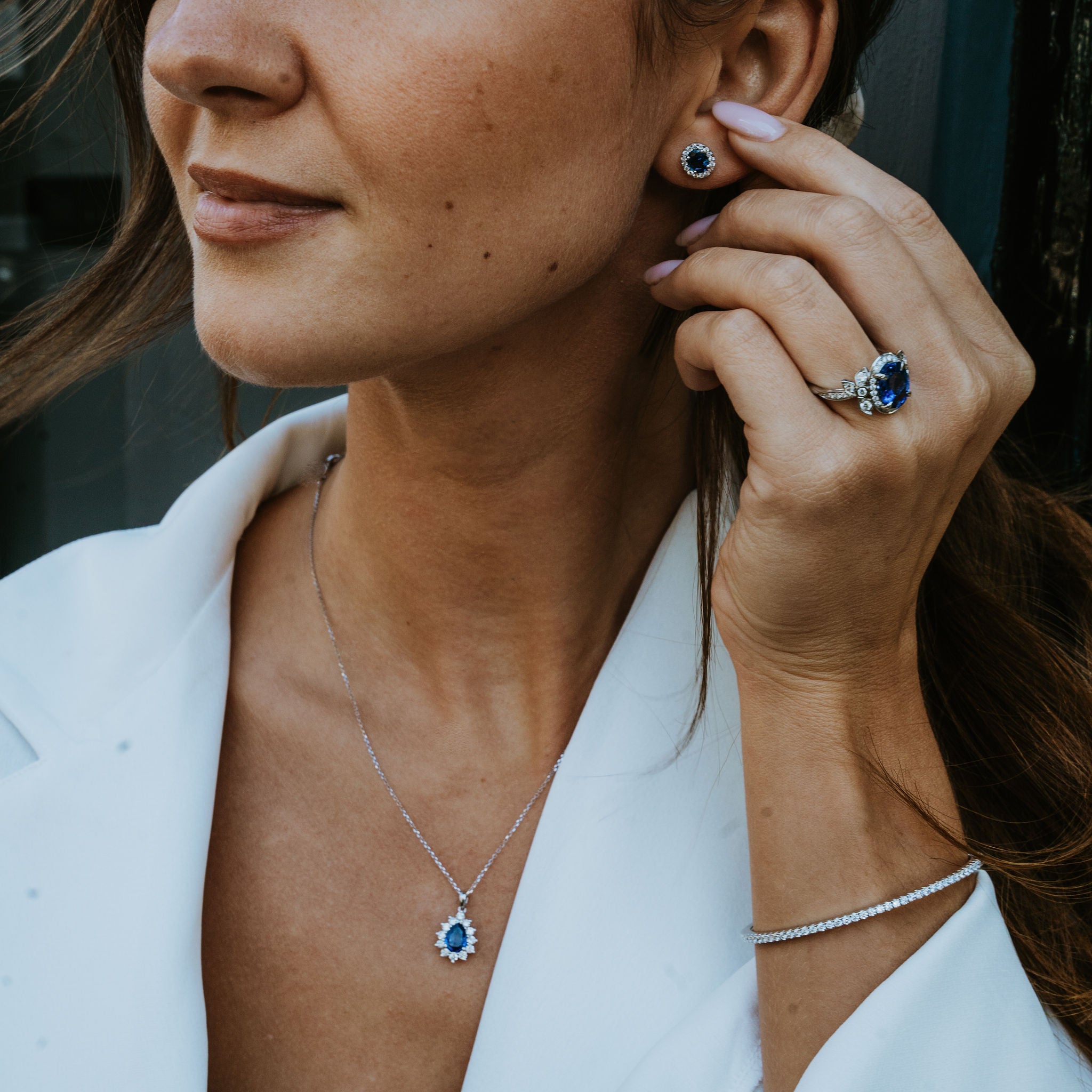


 If you opt for lab-grown diamond jewellery, then you can enjoy your bespoke pieces and engagement rings secure in the knowledge that your diamond is identical to one that has been mined.
Marilyn Monroe once sang that diamonds are a girl’s best friend, but the enduring allure of diamonds has captivated people for generations.
However, in recent years, the development and huge popularity of lab-grown gems have shaken up the jewellery world. According to Bloomberg, over half of all engagement rings use lab-grown diamonds.
Why have they become so popular? How closely do they resemble mined diamonds? And how has it changed how we see and value jewellery?
What Are Lab-Grown Diamonds?
Lab-grown diamonds are diamonds that are produced under the same intense pressures and high temperatures that warp carbon into diamonds in the natural world, but they are instead developed in laboratory conditions with exceptional precision.
Initially used for industrial purposes, particularly for high-powered abrasives and cutting tools, lab-grown diamonds have evolved to the point that it is practically impossible to distinguish them from mined diamonds, especially once cut into shape and set into jewellery pieces.
Where Did Lab-Grown Diamonds Come From?
What makes diamonds so beautiful and so special is not necessarily what they are made from but how they were made. Once this was learned, the long road from extensive mining to laboratory-developed gemstones with identical mineral properties was all but inevitable.
Despite modern processes for lab-grown diamonds being incredibly recent, the discovery that diamonds are made entirely out of carbon was made by Antoine Lavoisier in 1797.
Many scientists claimed to have developed synthetic diamonds using a variety of processes from the late 19th century up until the mid-20th century, but other scientists, most notably Sir Charles Algernon Parsons and Dr C. H. Desch, argued that they were more likely to be spinel than actual diamonds.
The first commercially successful lab-grown diamonds were only grown in 1955, and even then, they were too imperfect in terms of colour, size and contaminants to be useful for jewellery.
They were often yellow because the process required them to be contaminated with nitrogen, but eventual steps to clean up the process have led to a wide range of synthetic diamonds and other lab-grown gems.
Are Lab-Grown Diamonds Identical To Mined Diamonds?
Yes, from a physical and mineral properties standpoint, lab-grown diamonds are exactly the same as a mined diamond, carefully developed to have the same properties and even the same minute imperfections that a diamond would have.
There are some differences that can be detected using a spectroscope, but to the naked eye, they function exactly the same and look the same under normal light.
Unlike earlier popular synthetic gemstones such as cubic zirconia or moissanite, they are just as hard as diamond, and are only capable of being scratched and shaped by other diamonds.
The biggest difference between lab-grown diamonds and mined diamonds is where they come from, and this has fundamentally shaped our perception of value in jewellery.
How Did Lab-Grown Diamonds Change Jewellery?
Why are diamonds valuable? This is a question that has been asked for decades, but over the past decade, as consumers have been far more aware of the effect their purchasing decisions have on the wider world, it has become a particularly pertinent question.
Diamonds are typically valued using the four Cs:
-
Clarity - Fewer blemishes make a diamond more valuable.
-
Cut - Whether they can be cut easily with a saw, shaped into a desirable shape or split using their natural lines can affect their value.
-
Colour - Colourless diamonds are seen as more valuable due to the lack of contaminants and imperfections.
-
Carat - The size and weight.
Whilst these elements are still extremely important, the expense of diamonds came from the costs of mining and a perceived rarity; because diamonds were so hard to find, it stands to reason that they should cost a lot of money.
However, whilst this would help to divide the jewellery market in the mid-20th century, thanks to the rise of diamond simulants such as moissanite, the rise of lab-grown diamonds created a tipping point.
They were the same quality, were far more affordable, and lacked the ethical concerns that mined diamonds have increasingly come under scrutiny for.
However, it shifted the value of jewellery away from the cost of the raw materials and towards the skill of the person creating the jewellery.
This has led to a growing wave of elaborate, striking and truly beautiful bespoke pieces, only made possible thanks to lab-grown diamonds.