


Edinburgh is a beautiful city with a wealth of iconic locations in which to get engaged!
A city that has such a rich history, a huge castle, beaches and even an extinct volcano at its heart is bound to offer a wealth of grand and scenic opportunities for that life-changing moment and the inevitable commemorative pictures to follow.
Some of the very best spots include:
City Centre Highlights
-
Princess Street Gardens, with its green space with views of iconic buildings such as the National Galleries of Scotland, Edinburgh Castle and the Royal Scottish Academy of Art & Architecture.
-
Edinburgh Castle itself, the most iconic building in the entire city with glorious lofty views from its terrace.
-
The Scott Monument, with its 287 steps offering you the chance to pop the question from a lofty vantage point.
-
The Royal Mile, a thoroughfare steeped in history and culture in the heart of the Old Town, stretching from the castle at the top to the Palace of Holyroodhouse at the bottom.
Famous Hills
-
Arthur’s Seat: This extinct volcano overlooks the heart of the city at a lofty height of over 820 ft, providing superb views and a beautiful natural setting in which to pop the question.
-
Calton Hill: A hill replete with famous monuments, from the Parthenon-style National Monument to the Dugald Stewart Monument and the Portuguese Canon. This provides fine views and a great choice of famous backdrops for the big moment.
-
Corstophine Hill: Located in the west of the city near the zoo, this hill is a bit more off the beaten track, but offers attractive woodland, fine views and the architectural splendour of Clermiston Tower.
Great Seaside Locations
-
Cramond Island: the beautiful tidal island in the Firth of Forth, connected to the mainland by a causeway. Just check the tide times so you don’t get stuck!
-
Portobello Beach: the best seaside spot in the city with its golden sands and backdrop of Georgian and Victorian buildings.
Sporting Venues
-
Honourable mentions for sports fans will include Murrayfield, Tynecastle and Easter Road, although you may have to do it outside or in the stand, rather than trying to sneak onto the pitch!
These are far from the only fine spots in which to get engaged in this historic city. With numerous hills, historic streets, green parks and more, you will never find a shortage of places to make that special moment happen.
And if you do pop the question with one of our beautiful engagement rings, you’ll be enjoying craftsmanship that dates back 20 years, but which has also come on quite a journey as ring-making technology has advanced.
When Did Liam Ross Make His First Engagement Ring?
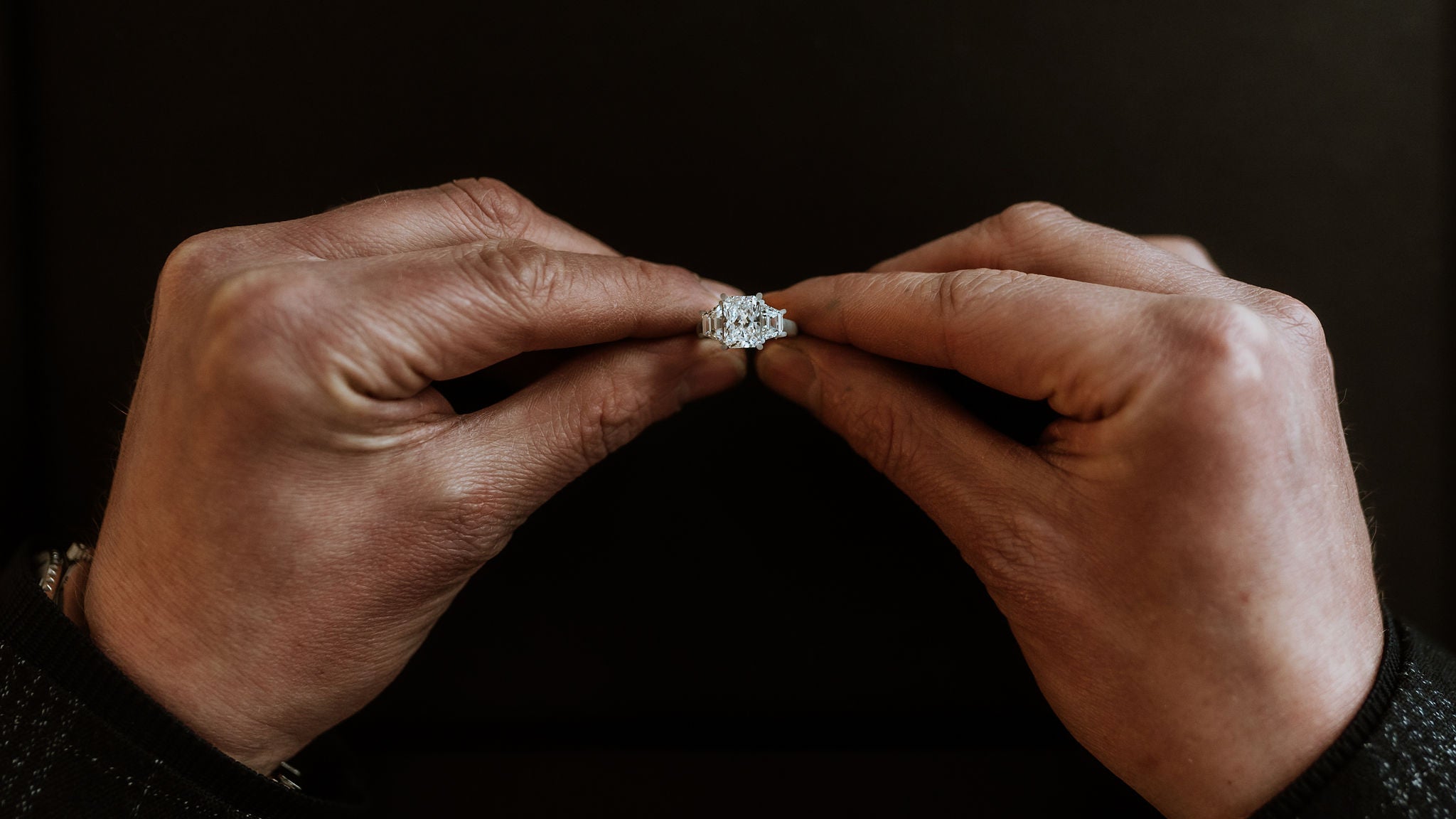
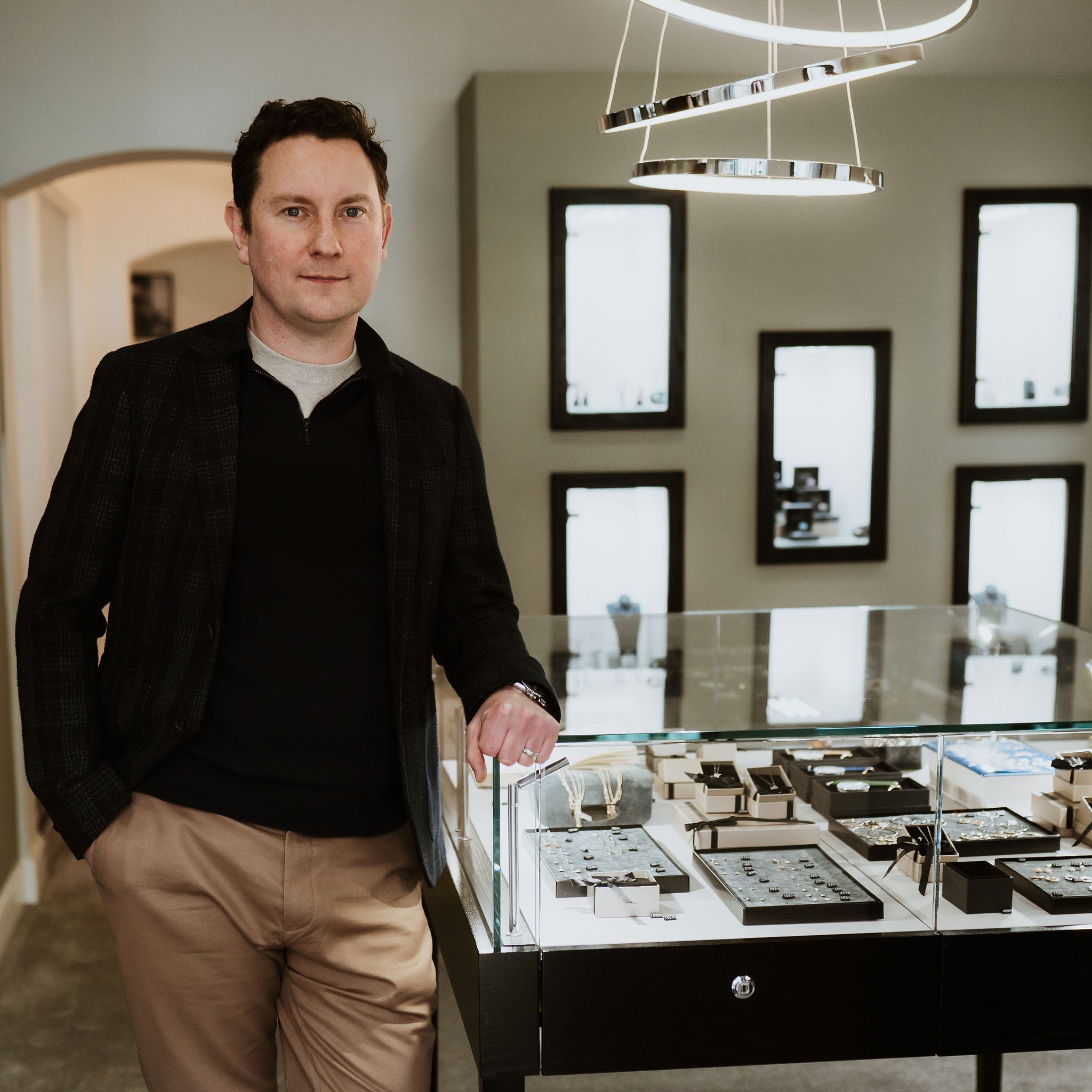
With so many exciting possibilities for your proposal spot, all you need now is the ring! We know a thing or two about these, because the first ring Liam Ross ever made was the one he used to propose to his wife Jenny, 20 years ago.
In this video, he outlines how much things have changed, while Jenny shows off some of the iconic locations where people get engaged across Edinburgh.
Among these spots, at Princess Gardens, was the paved area outside the Royal Scottish Academy of Art & Architecture with its grand Georgian pillars, where Liam actually popped the question!
As you can imagine, it was quite the undertaking for even a skilled jeweller to be crafting the very ring that he would be using to propose to his future wife.
However, the experience proved to be an invaluable one! What could be better when designing and making bespoke rings than to appreciate just how much care and attention needs to go into making it perfect for the lady who will be wearing it?
How Are Rings Hand-Carved Using Wax?
Two decades on, Liam and Jenny still have happy memories of that day, but much has changed, not least in how engagement rings are made.
Twenty years ago, the method of making rings was very different. The design of the ring that Liam proposed with was hand-carved from wax, a technique that is no longer necessary now thanks to the invention of the 3D printer.
With the old method, wax carvings would be cut from a block of wax, just like a sculptor carving an ornament from stone. This is done in several stages:
-
The initial block of hard wax is shaped as a ring mould, like a curved elongated tube with the hole representing where the finger will go.
-
For each ring, a slice of this block is cut off with a saw
-
The more intricate carving then begins, with gradual filing and cutting as the ring shape starts to become apparent
-
An electrical filing tool does a lot of the work as the ring shape is rounded out
-
In some places, such as the end of the prongs on a crown design to hold a gem in place, melted wax may be added to create the right shape.
-
Heating the wax can also help to craft intricate shapes and patterns in it
After this, the wax ring is used to cast a mould, which can then be filled with metal (gold, silver or platinum) to produce the ring. This is then finished off with a few refinements, including the removal of any excess metal, smoothing and polishing.
Lastly, the gemstones are added, producing the final ring.
How Has 3D Printing Changed The Ring-Making Process?
Ring-making was once a very lengthy process, but this is something that 3D printing can speed up.
However, in the process of designing a bespoke ring, we will still produce a wax model, which you can inspect to ensure that you have a clear idea of what the ring will look like and that you are happy with it.
The use of modern milling machines, 3D printers and computer design software does not mean there is any less craftsmanship, but it does mean we can work faster and produce more rings. Our new collection contains a range of attractive new products made this way.
If you want a bespoke engagement ring, you can benefit from the greater speed of the latest methods of making them, while enjoying a final product that is every bit as stylish as the ring that Liam placed on Jenny’s finger when she said yes.
What is more, you can enjoy proposing in one of Edinburgh’s many iconic locations to make the event as special as possible.