

The perfect blend of luxury, affordability and sustainability in the hands of an expert jeweller, lab-grown diamond jewellery has become the perfect gift for environmentally conscious loved ones, but part of the reason for that is due to the successful pursuit of perfection.
As a specialist in bespoke jewellery, we appreciate this devotion to evolving the craft of jewellery creation, as it helps us provide the perfect stones for the right people, whilst avoiding some of the environmental and moral issues that come from mining diamonds.
Having the right diamonds means that we can focus on producing perfect pieces without compromise and ensure that you are completely satisfied with the design, metalworking and diamond placement whilst also providing sustainable pieces.
To understand how this is possible, it is worth exploring what we mean by lab-grown diamonds, how they have changed over time as improved production methods have allowed for bigger diamonds identical on a molecular level, and what to consider before ordering a ring with them.
What Are Lab Grown Diamonds?
A lab-grown diamond is a diamond that has been grown using a controlled process which simulates the heat and pressure and long-term geological process which results in a mined diamond.
Lab-grown diamonds are identical on a molecular level to mined diamonds and can be made to increasingly larger sizes.
Initially used purely for industrial purposes such as diamond-tipped blades or industrial lasers, the processes to produce diamonds have improved so much that it is possible to create much clearer and more desirable gemstones which are visually and chemically identical.
There are ways to tell mined and lab-grown diamonds apart using specialist equipment, but for all intents and purposes they are exactly the same.
Lab Grown Diamonds Vs Diamond Simulants
Lab-grown diamonds are different from a “diamond simulant” such as cubic zirconia, rhinestones, or moissanite, both of which look similar to a diamond but are made from very different, much cheaper materials.
A lab-grown diamond, by contrast, is identical to its mined counterpart in every respect other than its origin. This includes its legendary hardness and longevity that ensure it can survive for centuries alongside the precious metals it is set into.
By contrast, simulants are better suited to costume jewellery, bright but far more affordable pieces that you would not necessarily mind if they happened to break or go missing during a party.
Are Lab Grown Diamonds New?
Whilst the current methods of producing lab-grown diamonds at scale have only existed for around a decade, research into creating diamonds has existed for over three centuries.
The first breakthrough was the discovery that diamond is actually carbon in a different molecular form, and so the game was afoot to try and convert ordinary lumps of coal into diamond using some kind of intense pressure.
Initially, it appeared to be about as fruitful as attempts to turn lead into gold, but the first claimed successful efforts came in 1893. The first confirmed synthetic diamond was made in 1928, and the commercial use of synthetic diamonds emerged in the mid-1950s.
Interestingly enough, this makes lab-grown diamonds about as old as the tradition of diamond engagement rings.
Does It Break Tradition To Buy Lab Grown Diamonds Rather Than Mined Diamonds?
No. Not only are they identical to diamonds, but the tradition itself is much newer than you might expect.
Despite the claim that Diamonds are Forever, the tradition of diamond jewellery is remarkably new. The name of that particular song and the James Bond film were based on a famous slogan by the diamond company De Beers.
The idea of diamonds being perfect for engagement rings and luxurious jewellery did not actually become ubiquitous until the 1940s, and the song Diamonds Are A Girl’s Best Friend did not reflect a universal view but was part of an immensely successful advertising campaign.
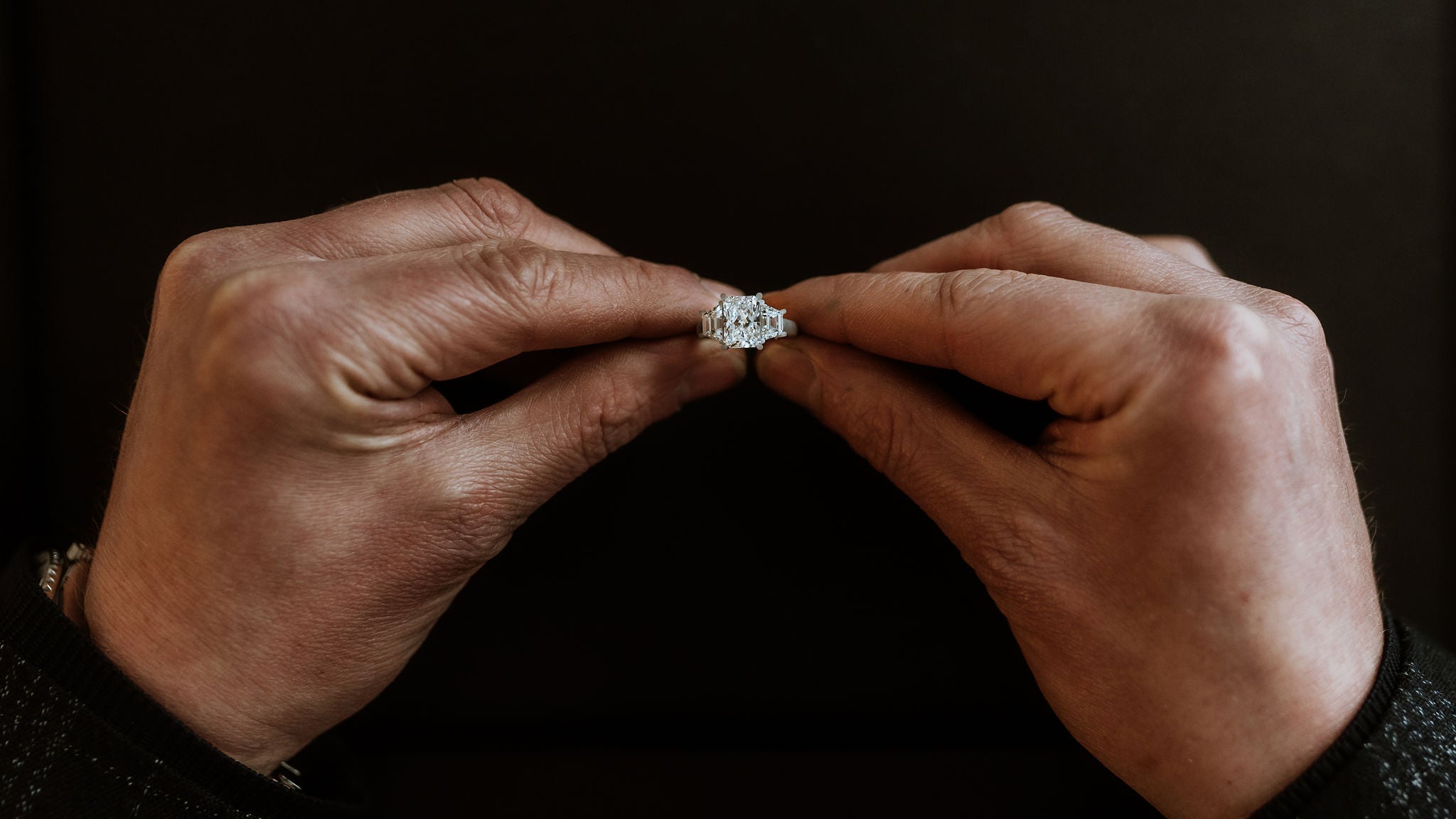
Obviously this does not make the tradition any less special, and we have a beautiful array of diamond engagement rings to choose from and a bespoke jewellery service to help you design the ring of your dreams, but it does mean you should not feel like you have to opt for mined diamonds.
Why Are Lab Grown Diamonds More Popular Now?
In the early 2010s, lab-grown diamond development had evolved to the point that you could get a lab-grown diamond for around the same price as a mined one, and two per cent of all diamond sales were lab-grown in 2013.
Ten years later, that figure has jumped to 17 per cent, and the share has only increased since then. So what happened?
The answer is remarkably complex and involves a price-fixing lawsuit against De Beers spanning over 60 years, evolutions in technology, evolutions in perception and changing customer priorities.
Price Fixing
What De Beers was accused of, and eventually pleaded guilty to, was market manipulation, deliberately working to ensure the prices of diamonds, both rough industrial and polished, were higher than what would have been their market value through a range of strong-arm tactics.
Once this was revealed, it ended up changing the perception of diamonds, or at least the idea that diamonds were as rare as they had been advertised to be.
Technological Evolutions
Whilst chemical vapour deposition diamonds were not initially gem-quality, the technology gradually improved. By the 2000s, it became possible to create diamonds in a lab of the same quality as diamond gems, and by the 2010s that system had been significantly refined.
This, alongside the development of the high-pressure, high-temperature method, allowed the rapid growth of beautiful diamonds.
Perception Evolutions
Diamonds used to be valued primarily for their providence; a diamond was a piece of coal that, through centuries of pressure, became a shimmering stone that could be cut into a pristine diamond.
As we know more about diamond mining and how diamonds are made, the focus is far more on the process of turning a rough diamond into a gemstone, and the skilled artisans who make it possible.
Changing Priorities
Customers want beautiful, sustainable jewellery which makes them feel good, and as more people are aware of the ethical questions that surround the diamond mining industry, a sustainable lab-grown diamond has become the perfect alternative.
As the stones are more affordable due to lower production costs, the priority can be on the design of the jewellery itself, with many customers looking for bespoke pieces to express themselves or their love for others.